
قصة بوصلة
بوصلة المسار المباشر 360 للتطوير الشخصي والمهني هي شركة متخصصة في هندسة التحول الشامل من خلال بناء الإنسان والبيئة والثقافة والأنظمة لتحقيق أثر مستدام قابل للقياس. نحن منصة عربية لفهم الإنسان قبل تطويره، وتشخيص التحديات قبل اقتراح الحلول، وصناعة رحلات تحول قابلة للقياس للأفراد والأسر والمدارس والمؤسسات والمجتمع.
تستند قصة بوصلة إلى كتابي «21 يوم للاحتراف» و «بوصلة إنسان»، التي ألّفها الدكتور هاني النجار، المؤسس والمستشار الاستراتيجي للشركة. يعكس الكتاب حصيلة أكثر من خمسة عشر عامًا من الخبرة في إدارة التحول في التعليم الفني، والتعامل المباشر مع احتياجات سوق العمل. تمثل بوصلة امتدادًا عمليًا لهذه الخبرة، إذ ترجمت المبادئ الواردة في الكتاب إلى منهجيات عملية وبرامج تطوير متقدمة، عالجت من خلالها التحديات الحقيقية التي تواجه المؤسسات والأفراد في العالم العربي.
الرؤية
بوصلة المسار المباشر 360 للتطوير الشخصي والمهني (Bosla360) تسعى لأن تصبح المرجعية العربية الأولى في هندسة التحول الاحترافي للأفراد والمؤسسات والمجتمعات، من خلال تمكين المدارس والمؤسسات والأفراد من بناء هويات احترافية متكاملة قائمة على القياس والتحسين المستمر والتميز المستدام.
الرسالة
إحداث تحول عميق ومستدام في الإنسان والبيئة والثقافة والأنظمة من خلال نموذج 7D PRO لتمكين الأفراد والمؤسسات من تحقيق أداء احترافي وأثر قابل للقياس.
القضية التي تتبناها بوصلة
معظم برامج التطوير العربية:
- تعلم المهارات
- تقدم المعرفة
- تعالج الأعراض
بينما فلسفة بوصلة هي معالجة الجذور:
- الهوية
- المعنى
- القيم
- الثقافة
- السلوك
- البيئة
- الأداء
- الأثر
نموذج D7 PRO — نموذج التحول الاحترافي
الملكية الفكرية الرئيسية لـ بوصلة
منظومة عربية متكاملة لبناء الإنسان الشامل وقياس التحول الحقيقي في الأفراد والمؤسسات والمجتمعات من خلال نموذج D7 PRO.
الأداء الاحترافي ليس ناتجاً عن المهارات فقط — بل هو حصيلة تفاعل سبعة أبعاد مترابطة.
بينما تركز كثير من برامج التدريب التقليدية على بعد واحد فقط كالمهارات أو الأدوات، فإن فلسفة بوصلة تقوم على معالجة الجذور وليس الأعراض، وبناء تحول احترافي متكامل ومستدام للأفراد والمؤسسات والمجتمعات.
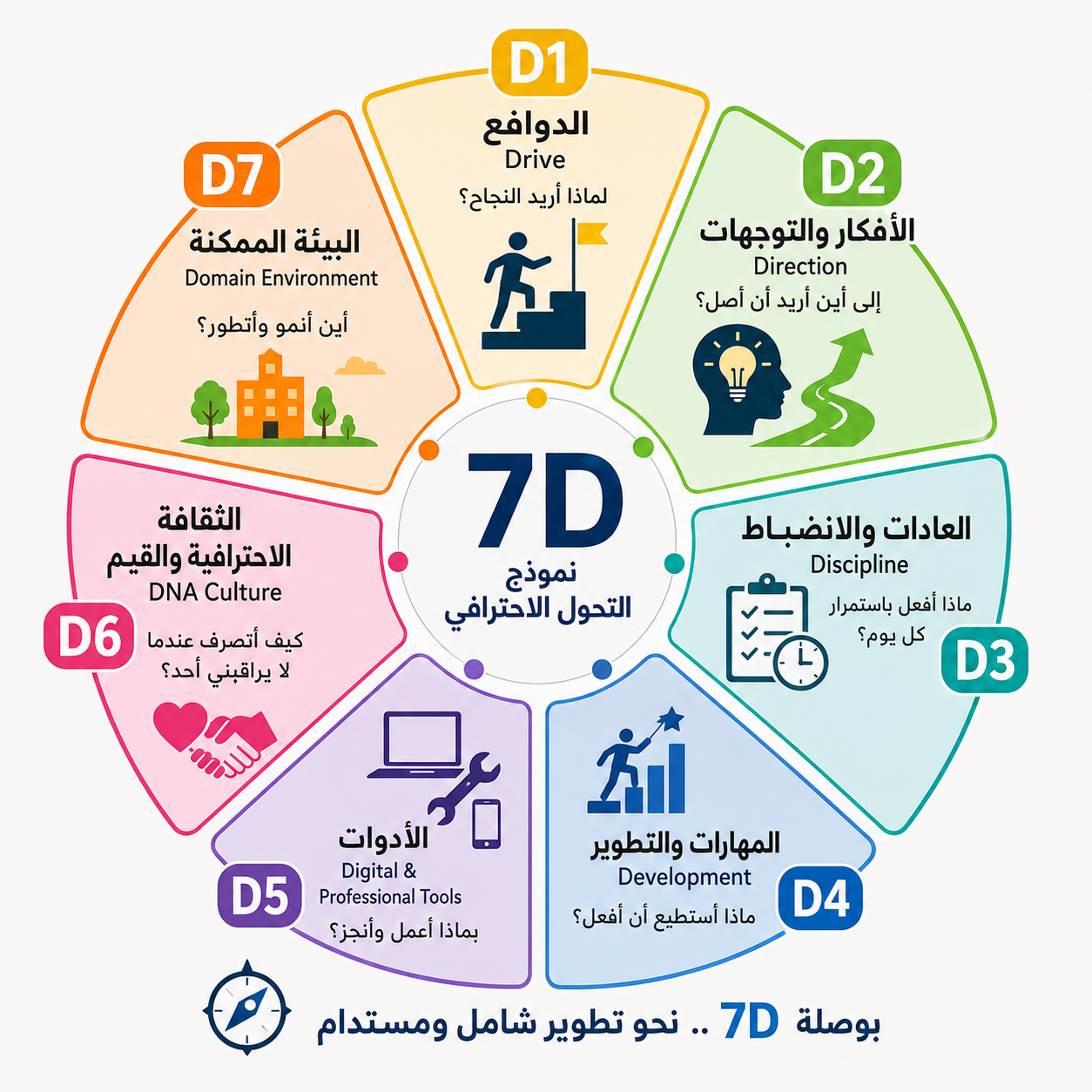
لماذا أريد النجاح؟
-
✓الدافع الداخلي والخارجي
-
✓الرسالة الشخصية والمعنى
-
✓الأسباب الحقيقية وراء السعي للتطوير
-
✓بناء الاستمرارية عبر هدف واضح
إلى أين أريد أن أصل؟
-
✓الرؤية المستقبلية
-
✓تحديد الأهداف والوجهة
-
✓المعتقدات والتصورات الذهنية
-
✓رسم المسار والخطة الاستراتيجية
ماذا أفعل باستمرار كل يوم؟
-
✓الانضباط الذاتي
-
✓بناء العادات الإيجابية
-
✓الاستمرارية والالتزام
-
✓إدارة الوقت والروتين اليومي
ماذا أستطيع أن أفعل؟
-
✓تطوير المهارات الفنية والسلوكية
-
✓التعلم المستمر
-
✓رفع الكفاءة المهنية
-
✓اكتساب القدرات الجديدة
بماذا أعمل وأنجز؟
-
✓الأدوات الرقمية والمهنية
-
✓التقنيات والأنظمة المستخدمة
-
✓البرمجيات ومنهجيات الإنتاجية
-
✓توظيف التكنولوجيا لتحسين الأداء
كيف أتصرف عندما لا يراقبني أحد؟
-
✓القيم والمبادئ المهنية
-
✓الأمانة والمسؤولية
-
✓السلوك المهني والأخلاقي
-
✓بناء هوية احترافية مستقرة ومستدامة
أين أنمو وأتطور؟
-
✓البيئة الداعمة للنمو
-
✓المؤسسة أو المجتمع أو الفريق
-
✓الموارد والفرص المتاحة
-
✓بناء منظومة تساعد على الاستمرار والنجاح
القيم الجوهرية
بوصلة المسار المباشر 360 للتطوير الشخصي والمهني تقوم على مجموعة من القيم الجوهرية التي توجه رؤيتها وأعمالها:
1. الاحترافية — الالتزام بالتميز والمعايير الأخلاقية والتحسين المستمر.
2. التمكين — تمكين المعلمين والطلاب من الوصول إلى كامل إمكاناتهم.
3. الابتكار — تشجيع الإبداع وتبني الحلول الحديثة والممارسات المتجددة.
4. الاستدامة — ضمان الأثر طويل المدى من خلال استراتيجيات مسؤولة وقابلة للتكيف.
5. الشراكة — بناء شراكات فاعلة تعزز النتائج التعليمية.
6. المسؤولية المجتمعية — الإسهام الإيجابي في المجتمع والبيئة.
تُترجم هذه القيم إلى سياسات تشغيلية من خلال معايير مُدَرَّبة للمدربين،
ونظام تقييم داخلي لملاءمة البرامج،
ومؤشرات أثر كمية ونوعية.